
Louis’s Personalized Vocal Training: From Online Lessons to Recording in Korea
Louis had a clear, soft tone but wanted smoother connections and more control. See how a personalized plan took his online lessons into a recording experience in Korea.

Louis already had a clear, soft tone. What he wanted was more control: smoother movement between notes, an easier connection between chest voice and head voice, and a clearer idea of how to improve. His training with K-POP VOCAL COACH began online and later brought him from California to Korea for in-person lessons and vocal recording.
The useful part of his story is how the lessons were organized around his voice. The coach identified what was already working, chose what needed attention first, and gave Louis more specific things to listen for in a song.
| Louis’s starting point | Training focus |
|---|---|
| A clear, light tone with a soft, expressive quality | Develop more strength while working with the voice he already had |
| Difficulty connecting notes and moving between registers | Address those connections within the song |
| Higher passages that still needed work | Refine the verse before moving on to the high notes |
| Uncertainty about what to change | Listen closely to breathing, vibrato, and the way notes connect |
Start with the voice the student already has
Louis enjoyed singing, but he could hear a gap between what he wanted to do and what felt possible. Connecting pitches smoothly and moving naturally between chest voice and head voice were difficult. He also described being unsure how to get better and being critical of his own singing.
When the coach reviewed his first submitted video, the assessment was more specific. Louis had a clear, light sound and a gentle, emotional quality. Alongside those strengths, the coach identified a need for more vocal strength, a better connection between registers, and breath control to help release throat tension in higher singing.
That distinction gives practice a direction. A soft tone can be part of a singer’s appeal, while a lack of strength or an uneven transition is something to work on. Separating those qualities helps a student understand what to keep developing and where a technical change is needed.
Why the verse came before the high notes
As Louis began working on a song, the coach described his singing as more natural than when they first met. There was still work to do on carrying strength upward, connecting notes, and handling the higher passages.
The next step was deliberate: spend enough time refining the verse before moving on to high-note practice. For Louis, the coach also identified a need to work on increasing breath pressure.
The important choice was the order of the work. A difficult high note can attract all of a singer’s attention, even when the phrases leading into it need care. Louis’s plan gave the verse its own place in training. It gave the lesson a clear priority.
This is where individual feedback becomes practical. The coach had listened to Louis and selected a priority for him. He could bring his attention to that part of the song instead of trying to solve every difficulty at once.
Learning to hear the choices inside a song
One of Louis’s clearest reflections was about listening. He found it helpful to look at the whole song before singing and then pay attention to details in the original performance: where the singer breathes, how they use vibrato, and how they connect one note to the next.
These are small choices that can be easy to miss when you mainly listen for the melody. A breath changes how a phrase is divided. Vibrato shapes a held note. The movement between notes helps give a line its character. Hearing those details gives a student more precise questions to bring into a lesson.
Louis emphasized that the aim was not to sing exactly like the original artist. Listening closely helped him understand the performance. From there, the details became material he could explore with his own voice.
He also appreciated being able to work on genres he enjoyed. In his account, earlier lessons had felt more focused on symptoms, such as unstable singing or uncertainty about particular notes. This training helped him feel that he was addressing the underlying problems.
From online lessons to recording in Korea
Louis wanted to meet his coach in person and experience vocal recording, so the online work continued into a visit to Korea. The visit gave the coach an opportunity to check how his singing had developed and whether he was ready for the recording.
That gave the preparation a concrete destination. Louis could take a song he had been working on remotely into in-person lessons and a recording setting.
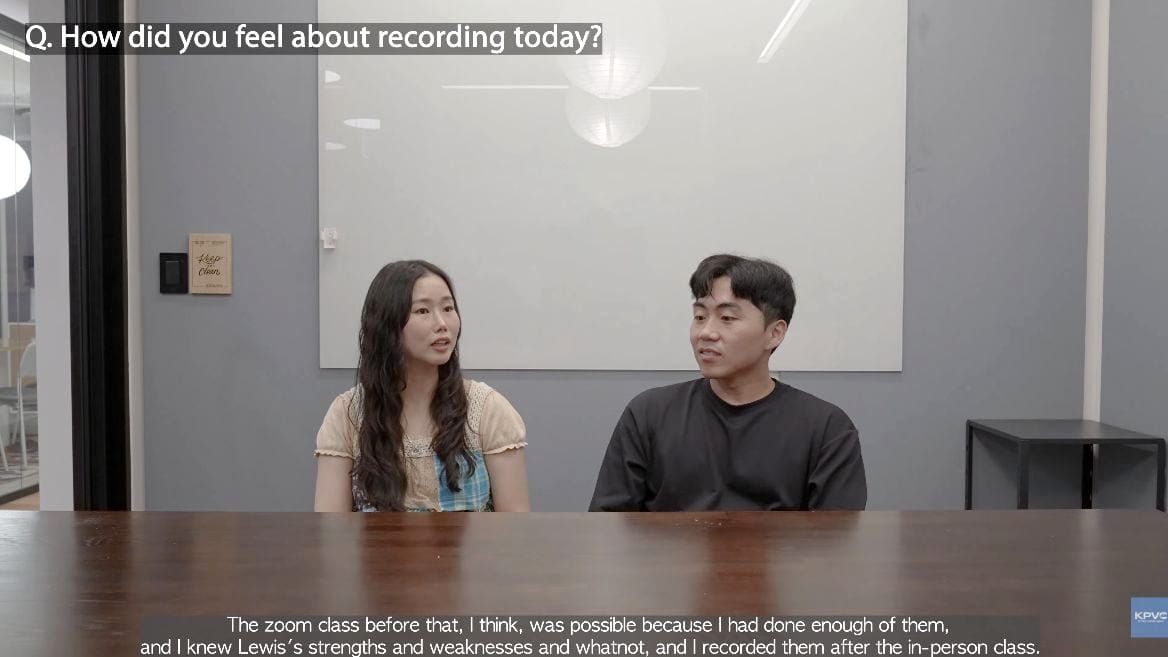
Looking back, Louis said the Zoom lessons he took from the other side of the world had been more helpful to him than the in-person lessons he had previously taken in the United States. His explanation centered on the teaching itself: the attention to his difficulties, the music he wanted to sing, and learning how to listen.
His progress included the coach’s assessment that his singing had become more natural, the experience of recording in Korea, and a more detailed understanding of what to work on. Together, those changes show what a personalized plan can look like in practice: recognize the voice’s strengths, choose the next priority, and help the student hear the song more clearly.
For another student’s experience of focused lessons and recording, read Kize’s 30-day singing challenge.
Watch Louis’s lessons and student interview
Video by K-POP VOCAL COACH. Watch the original on YouTube.
| Jump to | In the video |
|---|---|
| 0:30 | Louis explains what feels difficult in his singing |
| 1:13 | The coach identifies his strengths and training needs |
| 3:25 | Why the verse comes before high-note practice |
| 5:04 | Preparing for in-person lessons and recording in Korea |
| 10:26 | Louis reflects on his training experience |
| 11:26 | Learning to hear breathing, vibrato, and connections |
Your voice has its own strengths and next steps. In vocal analysis and one-on-one online lessons, we help you identify both and give your song practice a clearer direction.

From Online Lessons to Two Covers: JENNA’s 2024 Showcase
Online lessons, Korean vowel practice, and recording in Korea: follow JENNA’s 2024 showcase preparation and watch her two finished cover performances.

Starting Singing Lessons at 55: Eric’s K-Pop Vocal Journey
Eric shares why he started K-pop vocal lessons at 55, how his coach chooses songs, and what regular practice changed about his confidence.

Preparing a Cover Online: JOYANG’s ‘Always’ Project
Follow JOYANG’s remote ‘Always’ cover project with coach Hyoun, from clearer verse rhythm and connected notes to recording takes and tone choices.

BOYS II PLANET’s Nian Bo Heng: His K-Pop Audition Story
Nian Bo Heng recalls pitch training, song selection, practice feedback, and company auditions in his 2023 interview, before BOYS II PLANET.



