
Preparing for a K-Pop Audition on Your Own: What to Check Before Habits Set In
Build a practice routine that checks your technique, song choice, and response to feedback before you spend months repeating the same mistakes.

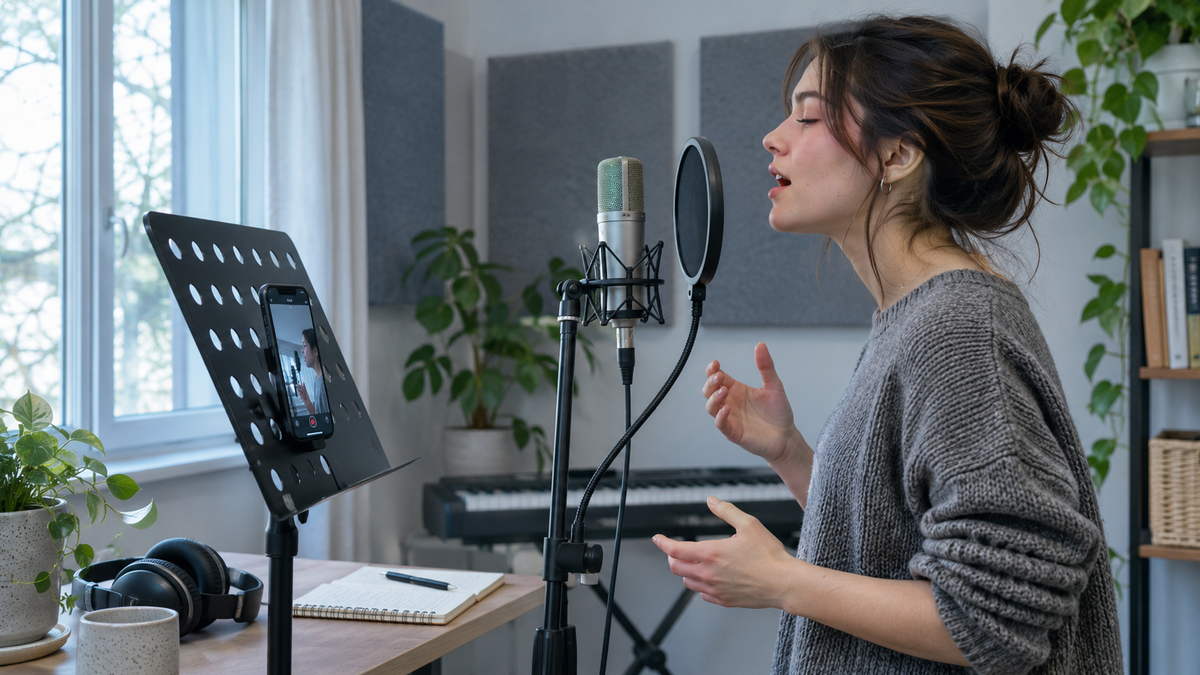
You can make progress while preparing for a K-pop audition on your own. The difficult part is knowing whether your practice is improving your singing or making an unhelpful habit more familiar. A useful routine needs a clear target, a recording you can compare, and feedback that tells you what to change next.
Our coaches have worked at BIGHIT MUSIC and coached IVE members. At K-POP VOCAL COACH, we help singers connect the work between lessons: identify the phrase that needs work, understand the adjustment, and carry it into their next performance. That matters when you are preparing for an audition, where you need to deliver a convincing take without stopping to troubleshoot every note.
What can go wrong with self-taught audition practice?
The biggest gap is often the absence of a reliable check on what you are repeating. You may become better at finishing a difficult song while still making the same pitch, rhythm, or tension-related mistakes.
| Practice pattern | What to check | A more useful next step |
|---|---|---|
| Singing a whole song repeatedly | Does the same phrase break down each time? | Isolate that phrase and compare it before and after one specific adjustment. |
| Copying a favorite singer's sound | Can you sustain the phrase comfortably in your own voice? | Test a suitable key and simpler delivery before copying stylistic details. |
| Following several online tutorials | Are the instructions addressing the same problem? | Choose one target and get feedback on how you are applying it. |
| Practicing only favorite songs | Does the selection show your strongest current singing? | Compare two contrasting excerpts on pitch, rhythm, tone, and consistency. |
| Waiting until you feel completely ready | Have you checked the actual application requirements? | Put the deadline, eligibility, and required materials into your practice plan. |
Why a tutorial cannot tell you whether you applied it correctly
A tutorial can demonstrate an exercise clearly. It cannot listen to your attempt and decide whether that exercise is addressing the cause of your problem.
For example, a singer may describe a phrase as “running out of breath.” That description does not tell a coach whether the difficulty begins with the first note, the pacing of the phrase, the key, or how the singer releases air. Trying to take a bigger breath on every attempt may leave the original problem untouched.
Make the question more specific: “On this line, I lose the final word. What changes before that happens?” Record the complete phrase, including the moment before the difficulty. A coach can work with that evidence much more effectively than with a general request to improve breath support.
Keep a short note after feedback: the phrase, the adjustment, and what you heard afterward. The next practice session should begin with that same target so you can check whether the change is repeatable.
How do you notice an unhelpful habit early?
Look for a repeated pattern across comparable takes. A mistake that appears at the same point gives you a clearer starting place than a general feeling that your voice sounds wrong.
Listen once for pitch and timing. Then watch the recording for visible changes: does your chin lift as the melody rises, does the jaw become rigid, or do you stop moving naturally just before the difficult word? These are useful observations to bring to a lesson. They do not, on their own, explain the cause or tell you which exercise to use.
Avoid turning the recording into a search for every flaw. Choose one phrase and one question. If the next attempt improves, check whether you can repeat that improvement and then sing the phrase in context.
Stop if an exercise hurts instead of pushing through more takes.
Why correcting a familiar habit takes time
A familiar approach can feel right even when it produces a result you want to change. You may understand a correction during a lesson, then return to the old approach when the accompaniment starts or the high note approaches.
A beginner who is open to learning can be easier to train than a more practiced singer who struggles to change a familiar approach. Develop the ability to try, hear, and repeat a correction alongside the skills you already have.
This is why being able to respond to coaching matters. Practice making one adjustment on a short passage, then repeat it with the words, timing, and musical expression restored. Your aim is to keep the change when your attention returns to performing.
In audition preparation, months spent repeating an unresolved problem can leave less time for that process. Begin getting specific feedback while your material is still flexible, rather than waiting until the week you plan to submit it.
Is your favorite song your strongest audition song?
Choose the excerpt that gives the clearest evidence of what you can do now. A favorite song may motivate you to practice, but it may also spend most of its time outside the range or style you can deliver consistently.
Compare two possible excerpts under the same recording conditions. Ask:
- Is the opening phrase secure without several warm-up attempts at the take?
- Can you keep the rhythm clear while pronouncing the words naturally?
- Does the most difficult moment sound intentional and controlled?
- Can you repeat the performance, rather than relying on one unusually good attempt?
- Does the excerpt meet the audition's current submission instructions?
Our audition song guide can help you compare possible material. Keep the official application page beside your plan. Eligibility and deadlines vary by audition. Checking them early helps you avoid spending months preparing material for a submission you cannot use.
What should a week of practice produce?
A week should give you evidence of a change you can explain. “I practiced every day” describes effort. “I can now finish this phrase in time without rushing the last three words” describes a result you can check.
Start with a baseline recording. Work on the target identified in feedback, then record the same passage again using the same key and accompaniment. Compare the relevant detail before judging the entire performance. Once the change holds, put the passage back into your audition excerpt.
This is a practice framework, not a demand to sing for a fixed number of hours. The amount of repetition should fit your current voice and the task. Quality drops when you keep making takes without listening or changing anything.
Questions about preparing on your own
Should I stop using singing tutorials?
Use them to learn vocabulary and hear demonstrations. When a technique does not produce the expected result, get feedback on your own attempt before adding more instructions.
Do I need to sound like the original artist?
Your audition should make your own singing easy to hear. Work on reliable pitch, rhythm, phrasing, and expression in a suitable key before adding vocal effects you associate with the original recording.
What should I bring to a first coaching session?
Bring an unedited recording, the audition instructions, and one or two timestamps where you get stuck. Explain what you have already tried and what changes you noticed.
When should I ask for feedback?
Ask when the same problem keeps returning, when you cannot tell whether an exercise is helping, or before committing to your final audition song. You do not need to finish preparing before a coach can help you prepare.
If you are ready to train every week, bring your current audition excerpt to a one-on-one consultation. We can help you identify the next useful target and build your practice around it. Explore coaching at K-POP VOCAL COACH.

How to Use Practice Recordings to Improve Your Singing
A practice recording is most useful when you review it, choose one specific adjustment, and record again. Simply repeating a song or watching yourself in a mirror can leave the same problem unnoticed.

How to Record an Honest K-pop Audition Practice Clip
Record a clip that lets listeners hear what you can actually sing. Clear video and audible vocals help; heavy pitch correction, layered takes, and strong effects can make it harder to connect the recording with your live performance.

What K-Pop Audition Preparation Should Include
Build audition preparation around song selection, camera presence, tone analysis, and focused work on the parts holding your performance back.

Five Things to Plan Before You Start K-Pop Audition Training
Choose your targets, understand your current skills, plan clear presentation, build fundamentals, and talk through the practical commitment.



