
How to Prepare for a K-Pop Survival Show Audition: Singing, Interviews, and Camera Work
Prepare a reliable performance, a specific introduction, and a calm response to feedback before a televised K-pop audition.

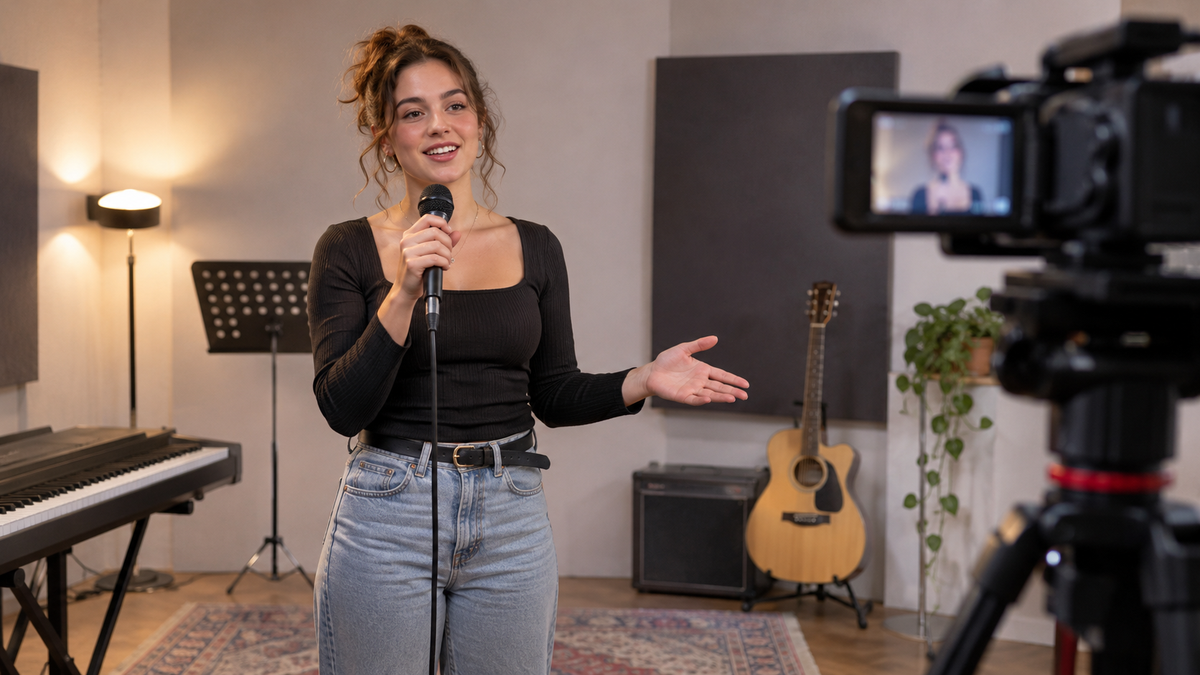
Preparing for a televised K-pop audition means preparing how you perform, how you explain yourself, and how you respond when something changes. Strong singing gives you a foundation. A clear introduction and natural camera presence help people understand the person behind that singing.
Screen time is a production and editorial decision. A vocal coach can help you prepare your performance and respond to musical direction; the production team decides what makes the finished program. Put your preparation into the parts you can actually rehearse.
What should you prepare before a televised audition?
| Area | What to prepare | How to check it |
|---|---|---|
| Vocal performance | An excerpt you can deliver consistently | Record complete takes on different practice days and compare the opening, difficult phrase, and ending. |
| Introduction | A specific description of who you are as a singer | Say it aloud without reading and remove claims you cannot illustrate. |
| Camera presence | A clear focus and expressions that fit the song | Watch a take without sound, then listen without watching. |
| Feedback | A calm way to listen, clarify, and try again | Rehearse receiving one instruction and applying it to a short phrase. |
| Interview | Real examples of your training, motivation, and growth | Answer the question directly, then give one concrete example. |
Why does vocal reliability still come first?
Reliable singing gives you something to return to when you feel nervous or receive an unexpected instruction. If your excerpt only works after many attempts, adding a camera, a spoken introduction, and unfamiliar listeners may make it harder to reproduce.
Choose an excerpt that reveals your strengths early. Practice starting from the actual audition beginning, including any instrumental lead-in, rather than always singing the whole song to reach your selected section. Know how you will finish so that the last phrase sounds complete.
Check whether you can keep the musical idea while making a small change. Can you sing a line more simply without losing the rhythm? Can you make the words clearer without rushing? A prepared singer needs room to respond, as well as a rehearsed version to present.
How do you make your introduction memorable?
Give people a clear, truthful detail they can connect to your performance. “I work hard and love music” may be sincere, but it does not tell the listener much about your particular experience.
Build your introduction from three questions: What kind of singing draws you in? What have you been working on? What can the listener hear in the excerpt you chose?
For example, a practice introduction might be: “I love songs where the words feel conversational. I've been working on keeping that feeling when the melody goes higher, and that's why I chose this section.” Use a detail that is true for you; this example is a rehearsal prompt, not a script to copy.
Keep the answer flexible. Prepare the ideas rather than memorizing a paragraph with exactly the same pauses. If the interviewer asks a different question, answer that question instead of forcing your rehearsed speech into the conversation.
What does natural camera presence look like?
It begins with knowing where your attention belongs. During a performance, follow the camera or staging direction you are given. During an interview, follow the interviewer's direction about eye line. Staring into a lens throughout every interaction is not a universal rule.
Film your excerpt at roughly the framing you expect to use. Watch it once with the sound off. Does your expression connect to the words? Does a difficult note make you look away before it starts? Do your gestures support the performance, or repeat automatically regardless of the lyric?
Then listen without looking at the image. If the delivery sounds tense or rushed, a larger smile will not solve that musical problem. Work on the phrase and check the image again afterward.
Our audition eye-contact guide gives you another way to review your focus. For a close-up, small choices can be enough: a settled gaze, an expression that changes with the lyric, and a composed finish. Rehearse staying present for a moment after the final note instead of immediately looking down or reaching for the recording device.
How should you respond to difficult feedback?
Listen for the part you can act on, clarify it if necessary, and try the passage again. You can show that you are engaged without pretending the feedback feels easy.
If the note is broad, such as “I can't hear the emotion,” ask a useful question when the format allows it: “Would you like the words to be more conversational, or more intensity in the chorus?” That gives you a practical direction to test.
Avoid explaining every reason a take went wrong before you have heard the full comment. Take a breath, acknowledge the instruction, and focus on the next attempt. Rehearse this with a coach: perform a short passage, receive one change, and apply it without restarting the entire preparation process.
A calm response does not require accepting insulting treatment or inventing gratitude. It means keeping your attention on the work and communicating clearly.
What should you say about your growth?
Use an example with a starting point, an action, and an observable change. This makes your answer easier to understand than a broad claim that you have overcome everything or are willing to do anything.
You might discuss a phrase you could not sing consistently, how you changed your practice, and what you can now repeat. Or describe learning to hear when you rush a line and how recording helped you notice it. Choose something you actually experienced.
Do not create conflict, exaggerate hardship, or imitate a personality because you think it will make a stronger storyline. Your introduction, interview answers, and performance should feel like they come from the same person.
A rehearsal that includes more than the song
Run through the whole sequence: introduce yourself, perform the excerpt, answer one question, listen to a note, and repeat a short section. Record it in one take so you can see the transitions you usually skip during practice.
Review one thing from each part. Was the introduction specific? Was the first sung phrase secure? Did you finish the answer or keep adding details? Did you understand the correction before trying again?
Choose the next rehearsal target from that recording. If the singing is reliable but the introduction sounds memorized, work on shorter answers. If you communicate comfortably but lose the opening note, spend the next session on the musical entry. Preparing every part does not mean giving every part equal practice time.
Questions about survival show auditions
Should I create a character for the audition?
Choose a clear way to describe your real strengths and interests. Let that guide your introduction and song choice. You do not need an invented personality or dramatic backstory.
Should I choose the most difficult song I can sing?
Choose a song that demonstrates your strengths consistently. A difficult moment helps only when you can deliver it musically and repeat it under audition conditions.
How can I practice responding to criticism?
Ask a coach or practice partner to give one specific instruction after a take. Repeat the relevant phrase, then discuss whether the requested change was audible. Practice listening and applying the note before explaining your intention.
What if I do not know how to answer an interview question?
Take a moment to think and give a direct, honest answer. Use a real example when you have one. Avoid guessing what the production team wants and making up an experience to fit it.
Our coaches have trained survival show contestants, and our students include a survival show contestant. If you are ready to train every week, we can help you choose a suitable excerpt, strengthen the details of your singing, and practice responding to feedback. Apply for a one-on-one consultation at K-POP VOCAL COACH.

K-Pop Audition Etiquette: From Your Greeting to Your Exit
A clear greeting, a prepared introduction, and calm communication help you handle the audition room with confidence.

How to Show Coachability in K-Pop Audition Preparation
Show that you can listen, make a specific adjustment, and work reliably with others. Practice the difference between agreeing with feedback and applying it.

How can you prepare for K-Pop auditions as a foreigner?
Prepare for K-pop auditions as an international applicant: review requirements, plan your introduction, choose a song, and rehearse singing and dance.

How K-Pop Trainees Prepared: Lessons From Our Interviews
In interviews with about 50 major-agency trainees, only two said they prepared alone. See what that group shared and how to plan your own practice.



